
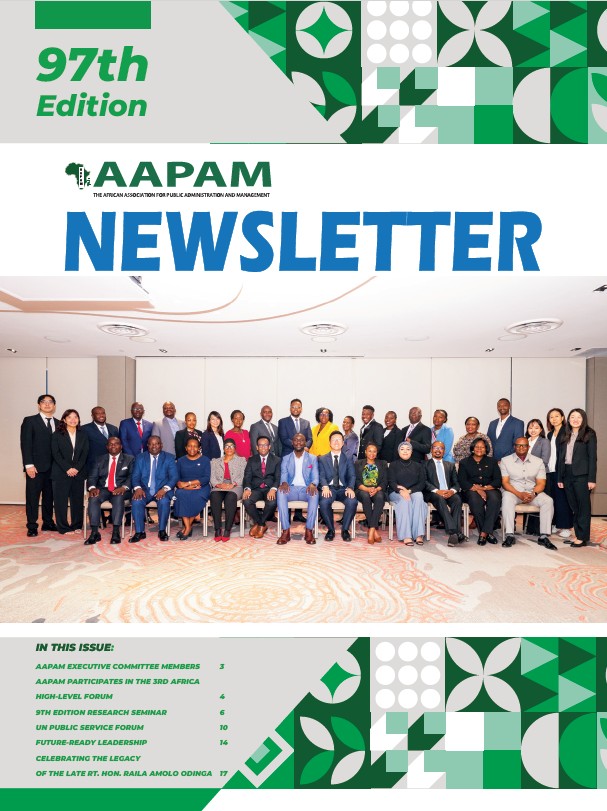
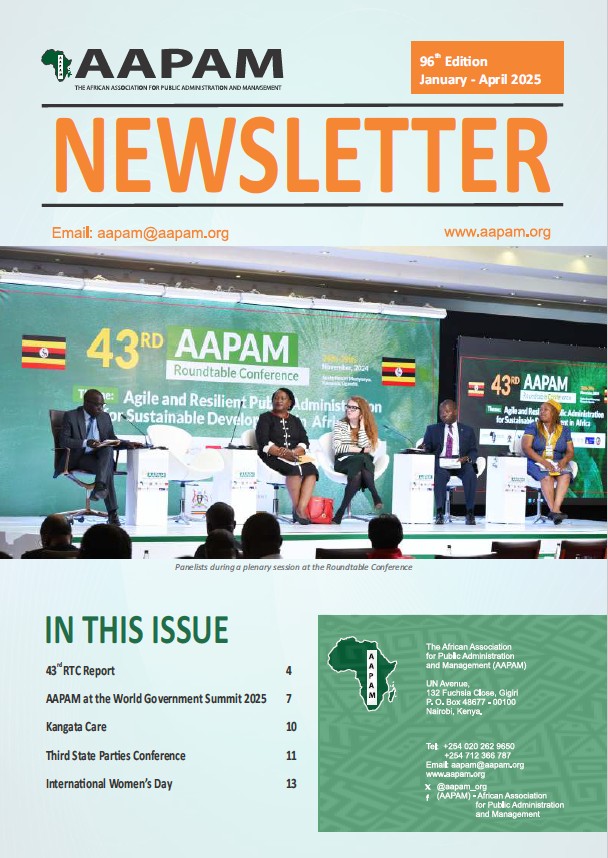
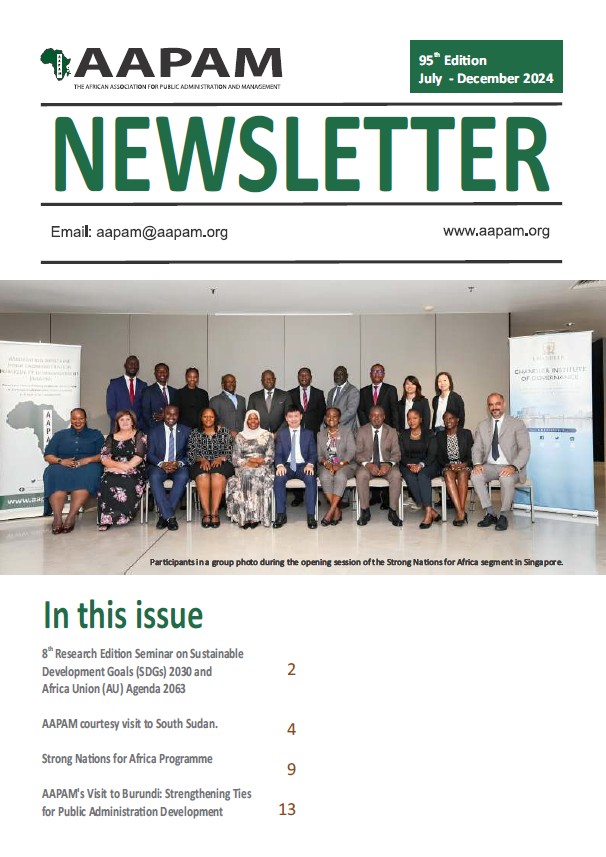
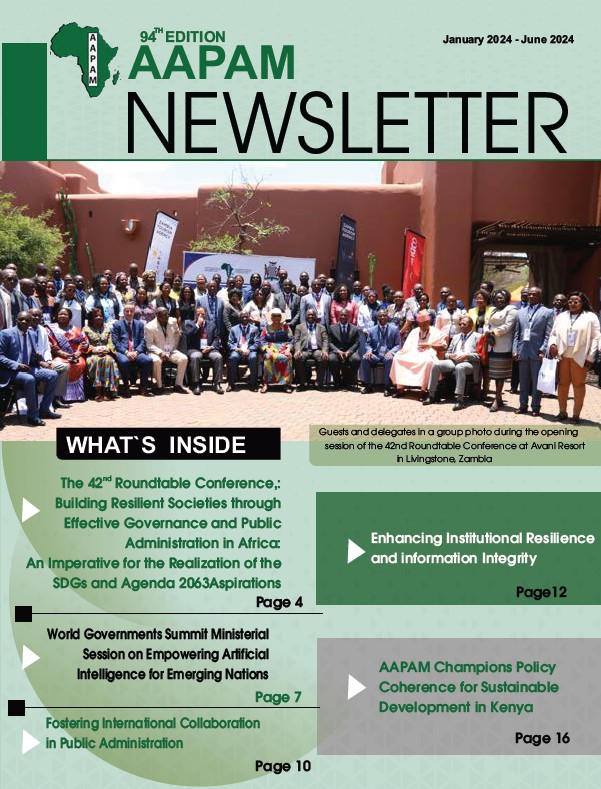
 Pursuant to the recommendations of the Inter-African Public Administration Seminar held in Botswana from the 3rd to the 9th of October, 1970 and recognizing the need for the development of competent administrators and managers for rapid economic and social development of the African continent and in order to promote the study, practice and status of the profession of Public Administration and Management and the adoption of adequate administrative and management practices and in recognizing the importance of co-operation among African States and institutions in the mobilization of resources for the achievement of these objectives;
This representative meeting of the public administrators, managers, institutes of public administration and university schools of administration and management assembled in Freetown, Sierra Leone hereby formally resolve this 6th day of November, 1971 to form the African Association for Public Administration and Management (AAPAM) and adopt this constitution.
 Gender Mainstreaming in AAPAM
The world is moving towards gender mainstreaming in a bid to enhance development. A gender mainstreaming policy is therefore a powerful tool that gives men and women a platform to fully realise their potential in the process of development. AAPAM joins likeminded institutions that have embraced gender perspectives in its programmes, activities and projects.
I therefore urge all our partners, members (African Governments, Corporate and individuals) and National Chapters to draw from this policy when planning their activities, programmes and projects.
In preliminary gender mainstreaming workshops and seminars, we realized that mainstreaming demands for a holistic strategy coupled with a positive spirit, a committed attitude and a participatory approach. I therefore, welcome your participation as we work together to enhance gender equity and equality by implementing this policy.
This journey has been made fruitful by the effort of a number of our committed partners and individuals. Special thanks to the Institute of Public Administration of Canada (IPAC) and the Department of Foreign Affairs, Trade and Development (DFTAD)- Canada who have funded and fully supported the production of this policy. I am further immensely grateful to Kisanet Tezare- Senior Gender Analyst PAC/Kartini and Dana Peebles, Director – Kartini International/IPAC Gender Advisor for their enormous expertise that has helped carve this policy. I also compliment the AAPAM Executive Committee, Council and Staff for making the production of this policy successful.
I hope that this gender policy opens a new chapter for sourcing, planning, funding, implementing, monitoring and evaluating AAPAM programs and projects.
G. K. Scott
AAPAM Secretary General
AGENDA 2063 is Africa’s blueprint and master plan for transforming Africa into the global powerhouse of the future. It is the continent’s strategic framework that aims to deliver on its goal for inclusive and sustainable development and is a concrete manifestation of the pan-African drive for unity, self-determination, freedom, progress and collective prosperity pursued under Pan-Africanism and African Renaissance The genesis of Agenda 2063 was the realisation by African leaders that there was a need to refocus and reprioritise Africa’s agenda from the struggle against apartheid and the attainment of political independence for the continent which had been the focus of The Organisation of African Unity (OAU), the precursor of the African Union; and instead to prioritise inclusive social and economic development, continental and regional integration, democratic governance and peace and security amongst other issues aimed at repositioning Africa to becoming a dominant player in the global arena.
As an affirmation of their commitment to support Africa’s new path for attaining inclusive and sustainable economic growth and development African heads of state and government signed the 50th Anniversary Solemn Declaration during the Golden Jubilee celebrations of the formation of the OAU /AU in May 2013. The declaration marked the re-dedication of Africa towards the attainment of the Pan African Vision of An integrated, prosperous and peaceful Africa, driven by its own citizens, representing a dynamic force in the international arena and Agenda 2063 is the concrete manifestation of how the continent intends to achieve this vision within a 50 year period from 2013 to 2063. The Africa of the future was captured in a letter presented by the former Chairperson of the African Union Commission, Dr. Nkosazana Dlaminin Zuma.
The need to envision a long-term 50 year development trajectory for Africa is important as Africa needs to revise and adapt its development agenda due to ongoing structural transformations; increased peace and reduction in the number of conflicts; renewed economic growth and social progress; the need for people centered development, gender equality and youth empowerment; changing global contexts such as increased globalization and the ICT revolution; the increased unity of Africa which makes it a global power to be reckoned with and capable of rallying support around its own common agenda; and emerging development and investment opportunities in areas such as agri-business, infrastructure development, health and education as well as the value addition in African commodities
Agenda 2063 encapsulates not only Africa’s Aspirations for the Future but also identifies key Flagship Programmes which can boost Africa’s economic growth and development and lead to the rapid transformation of the continent.
Agenda 2063 also identifies key activities to be undertaken in its 10 year Implementation Plans which will ensure that Agenda 2063 delivers both quantitative and qualitative Transformational Outcomes for Africa’s people.